
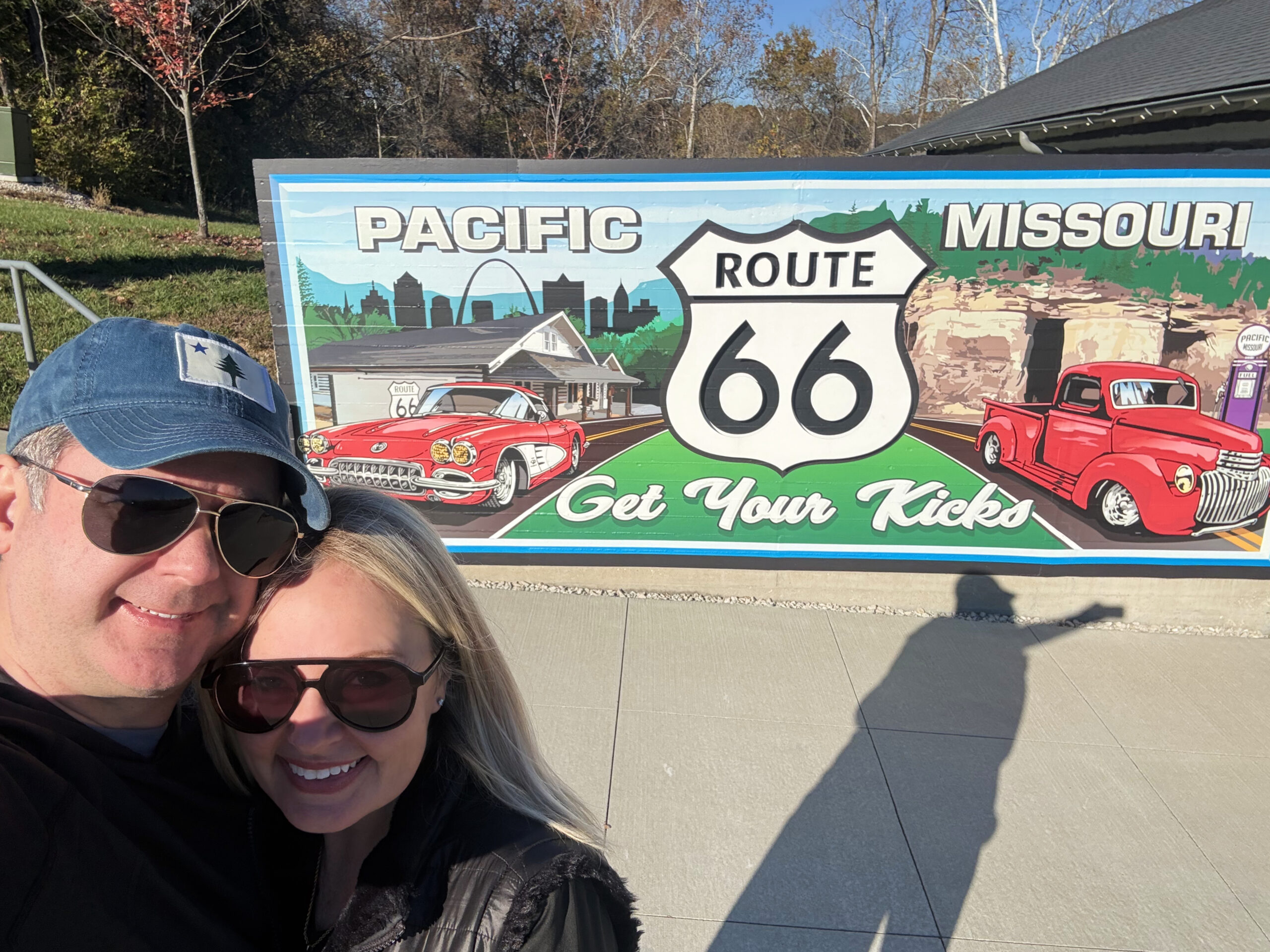
Back to Court 3, Lot 10
It was a sunny November afternoon in 2026 when we crossed the Mississippi River, passed the St. Louis Arch, and heard Google Maps announce:
“Welcome to Missouri.”
I’ve traveled through nearly every state in the country, yet this remains my favorite state-line crossing.
There’s just something about coming home.
It had been twenty-five years since my last real visit, aside from a brief pass-through in 2021. This time, I had several days and a long list of places and people I wanted to see.
As usual, our first stop was Planet Fitness for a workout and shower, followed by our customary breakfast smoothie in the van. I was still sipping mine when we pulled up to our first destination:
5300 Arsenal Street.
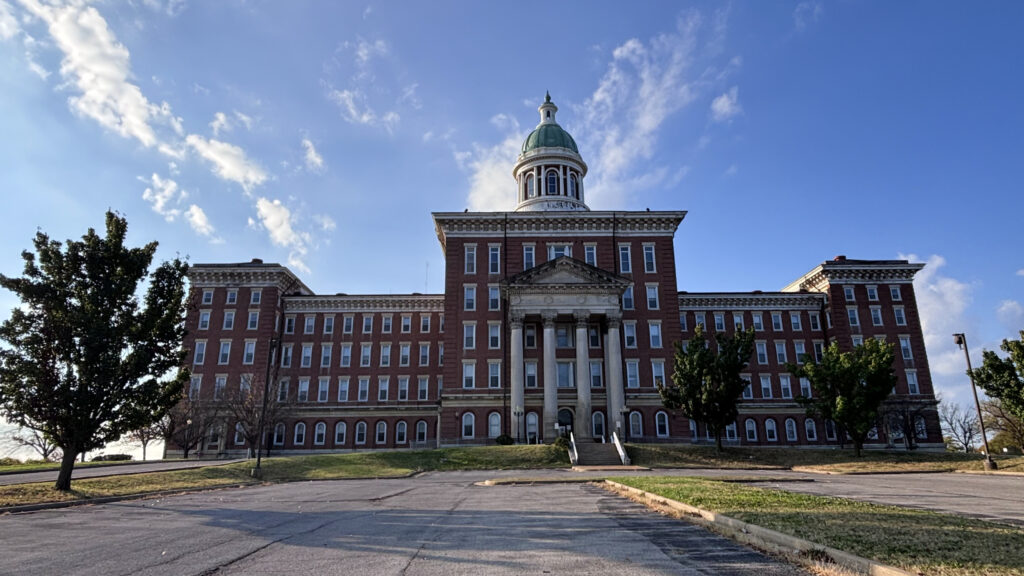
When I researched the address beforehand, I was shocked to discover it was still there.
We sat in the van reading about the property before getting out to explore. Built in 1869 as the St. Louis Insane Asylum, it later became the St. Louis State Hospital. Although it no longer functions as a nineteenth-century asylum, the iconic domed building still stands as part of the St. Louis Psychiatric Care Center campus.
As I walked the grounds, I thought about all those childhood conversations with my mother.
Back then, Arsenal Street sounded mysterious and terrifying. To my little-girl mind, “Arsenal Street” and “crazy” were practically synonyms.
Now I know it was simply a hospital.
And now, with a psychology degree and a few more decades of life experience behind me, I understand much more about mental illness than I did then.
Looking at those old buildings, I felt sadness for the people who passed through them. Fifty years ago, mental illness was far less understood than it is today. Treatment options were limited, and many people suffered in ways we can scarcely imagine now. Reading They Call Them Camisoles by Kristen Anderberg, a book about California’s Camarillo State Hospital (where my grandmother Eleanor Laemmle was institutionalized), helped open my eyes to that reality.
As Dan and I wandered the grounds, I found myself wondering how our family’s story might have unfolded if people like my father had received the help available today.
Would effective treatment have changed everything?
Would my parents have stayed together and made their way back to California as planned? Would my mother have reunited with her “Laemmle Faemmle”? Would I have grown up knowing my cousins who remained strangers for most of my life?
Would Pacific, Missouri have been little more than a town we once passed through?
Maybe.
But that’s not what happened.
Instead, a broken-down car, a struggling father, and a small Missouri town combined to create the childhood that became my life.
Dan and I often talk about the butterfly effect. Tiny events can ripple outward in ways no one could ever predict. A butterfly lands on a flower. A car breaks down in the wrong place. A family takes a different path than planned.
And suddenly, an entirely different life unfolds.
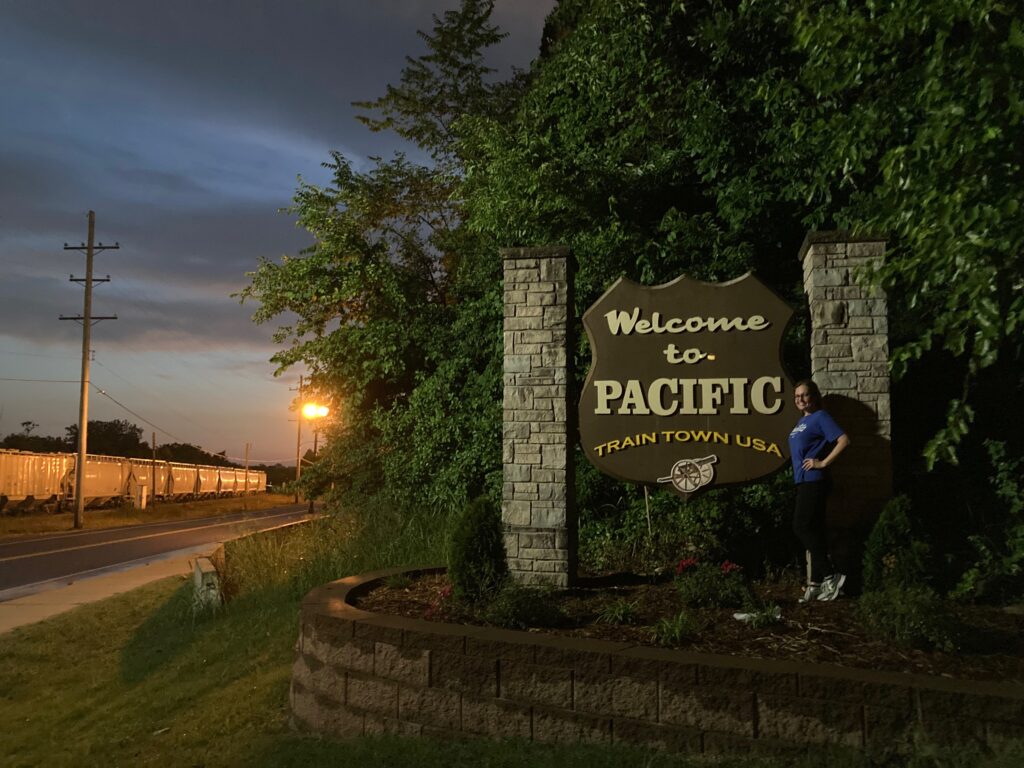
Pacific, Missouri became my world for nearly thirty years because of one of those unexpected turns.
Ah, Arsenal Street.
I understand you now.
Funny how fear shrinks when understanding grows.
Back to Court 3, Lot 10
Next on my itinerary was the trailer court.
I wanted to experience it on foot because that’s how I experienced it as a child. Besides, I wasn’t entirely sure how much I remembered. I wanted to find out whether I could still find my way around without Google Maps.
As we pulled into town, I spotted the McDonald’s from my childhood. Amazingly, it’s still in the same place it was fifty years ago. That building holds enough memories for a post of its own, but for now, we parked there and started walking toward the trailer court.
Hand in hand, Dan and I made our way down Western Avenue.
It all came back immediately.
The streets. The turns. The lay of the land.
In fact, Pacific may be the only place on earth where I could navigate perfectly without a map. I know that town like the back of my hand.
Our first stop was the site of Guffy’s Market.
The little store is gone, replaced by other businesses, but the memories remain. Standing there, I remembered my bus stop, the candy I once stole, the suspicious white van that still occasionally crosses my mind, and the time a bully followed me off the school bus threatening to beat me up. I remember running all the way home while loudly calling on Jesus for protection.
Funny how entire chapters of childhood can be hidden inside a single street corner.
As we continued down Western Avenue, I pointed out the house where Mormon missionaries once lived. It was the only house in a sea of trailers, which made it memorable enough. What I remember most, though, is that it always smelled like fabric softener. Fifty years later, that is somehow the detail my brain decided to preserve.
After Guffy’s and the Mormon house, something became clear.
Very little had changed.
The trailer court felt frozen in time. Places I had remembered only in fragments suddenly became crystal clear.
Not all the memories were good ones. I showed Dan the trailer where I believe the man lived who invited neighborhood children over for ‘Bible stories’ and gifts before eventually trying to molest me.
We paused at the intersection where my father once followed my sister home from the bus stop in an attempt to take us.
Then we turned onto Dandelion Drive.
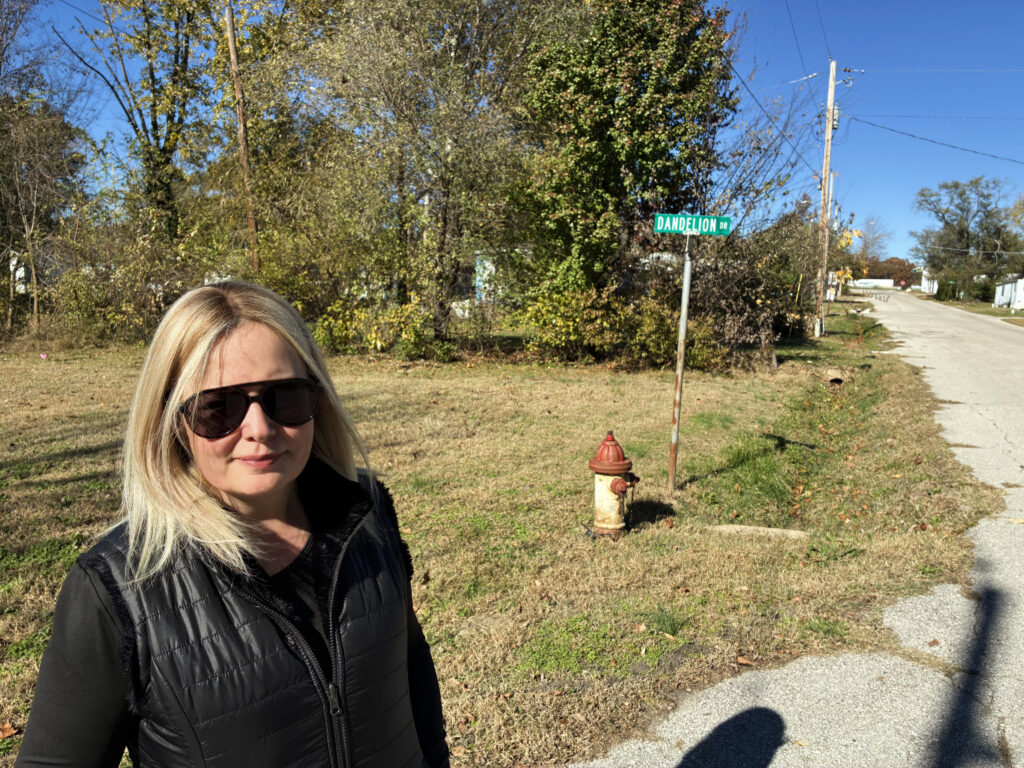
As we walked, I told Dan the story of how my sister cleverly changed our address from “Court 3, Lot 10” to “1913 Dandelion Drive” to make it sound a little less… trailer-courty.
Somewhere along that road, memories began arriving faster than I could tell them.
I remembered lining up with the neighborhood kids for foot races. Shawn. Jeffrey. Shannon. Todd. Josh. Mary. A collection of names I hadn’t spoken in decades. I was usually one of the few girls in the group and fiercely determined to prove I could outrun the boys.
Sometimes I even did.
I remembered playing in the ditch along the roadside, which is still there today. I happened to have a painted rock in my pocket, so I left it there for the next little girl who might be playing in it.
I hope she finds it.
Eventually we turned into Court 3.
And there it was.
Lot 10.
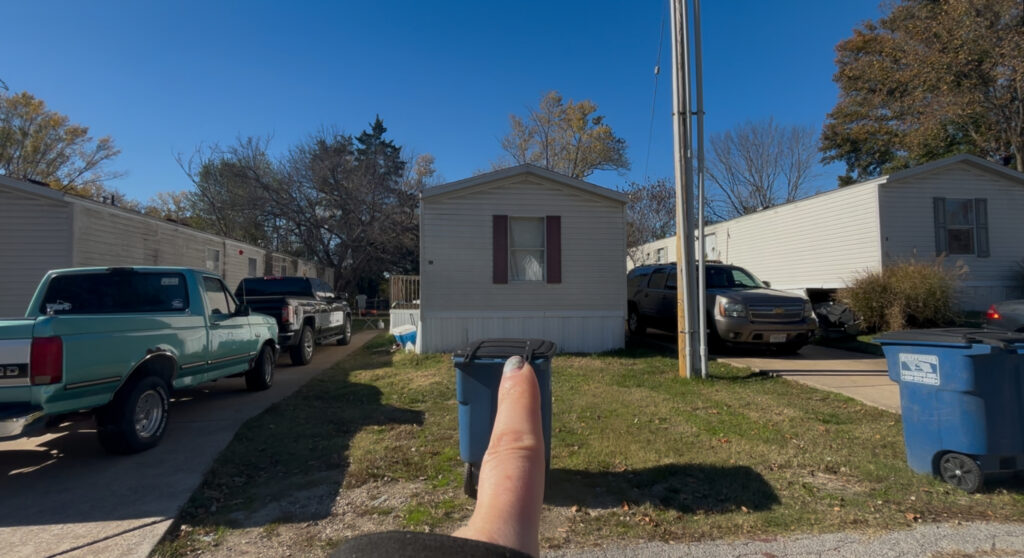
The trailer itself is different, but the location was unmistakable. Like most places from childhood, it seemed smaller than I remembered.
The yard where I once made mud pies and ate blades of grass.
The tree in the back whose red berries I ate with complete confidence and absolutely no adult supervision.
Looking back, I’m surprised I survived.
I pointed out Happy’s trailer on the left. Ruby Ray’s trailer on the right.
I remembered sitting beneath our trailer before the skirting was installed, playing with roly-poly bugs and Weeble-Wobbles. Does anybody remember those? Weebles Wobble, but they don’t fall down!
I remember running through the neighborhood at night catching lightning bugs and sticking their glowing tails all over myself so I could dance in the darkness.
I remembered kissing boys inside the shed across the street.
And I remembered the Strawberry Shortcake doll a kind woman once gave me for Christmas.
Being there felt surprisingly emotional.
Partly because it felt like coming home.
But mostly because I was experiencing it with Dan.
There’s something powerful about having someone walk through the landscape that made you who you are. As we wandered those streets together, I felt deeply seen. The trailer court wasn’t just a place anymore. It was a map of my childhood, full of clues explaining pieces of who I became.
Before we left, we decided to each leave a small toy behind in the yard.
Years ago, a stranger showed kindness to a little girl who didn’t have much.
This was our way of passing that kindness forward.
Maybe there’s no child living there now.
Maybe no one will ever find them.
But if someone does, I hope it makes them smile.
And if by some chance they treasure it the way I treasured that Strawberry Shortcake doll, then perhaps that woman’s kindness is still moving through the world, one child at a time.
We took one last walk through the back streets where my friend Shannon Russell once lived.
I remembered a murky lagoon that sat behind the neighborhood. My mother constantly warned me to stay away from it, which naturally made it irresistible. One day I came home covered in leeches and ended up at the hospital having them removed.
Today, the lagoon is gone.
The area has been filled in and transformed into a grassy field.
Ironically, the road beside it is still called Lake Circle Drive.
“I guess it was a lake before it was a lagoon,” Dan joked.
That sparked a conversation about all the places we’ve visited during van life where yesterday’s names no longer match today’s reality.
I wonder if the people living on Lake Circle Drive know there was once a lake there.
Then a lagoon.
Then a little girl playing at its edge who probably should have listened to her mother.
Eventually it was time to leave.
Goodbye, trailer court.
Thank you for taking care of the little girl who grew up here.
And please be kind to all those who are still writing their stories within your streets today.
Reflection
The biggest surprise wasn’t how much the trailer court had changed.
It was realizing how much I had changed.
As a child, the trailer court and the town surrounding it felt like my entire world. Beyond those streets, I could barely imagine what life might hold.
Today, that little corner of Pacific is still part of me. It shaped me in ways I’m only beginning to fully appreciate. But what once felt like my whole world now occupies just a small corner of a much larger story.
The little girl racing her Big Wheel through those streets could never have imagined what was ahead.
Raising children.
Becoming a photographer, a writer, and an artist.
Traveling across the ocean to study in Germany.
Unraveling family mysteries hidden for generations.
Exploring the country in a white van with the man she loves.
Back then, she only knew that tomorrow would begin again in Court 3, Lot 10.
If I could say one thing to that little girl today, it would be this:
You’re going to be okay.
Actually, you’re going to be better than okay.
One day you’ll come back here, not with shame or fear, but with gratitude.
You’ll understand that every scraped knee, every lightning bug, every friendship, every heartache, and every unexpected turn helped make you who you became.
Because this tiny trailer isn’t where your story ends.
It’s where your great big tiny life begins. ❤️
Leave a Reply